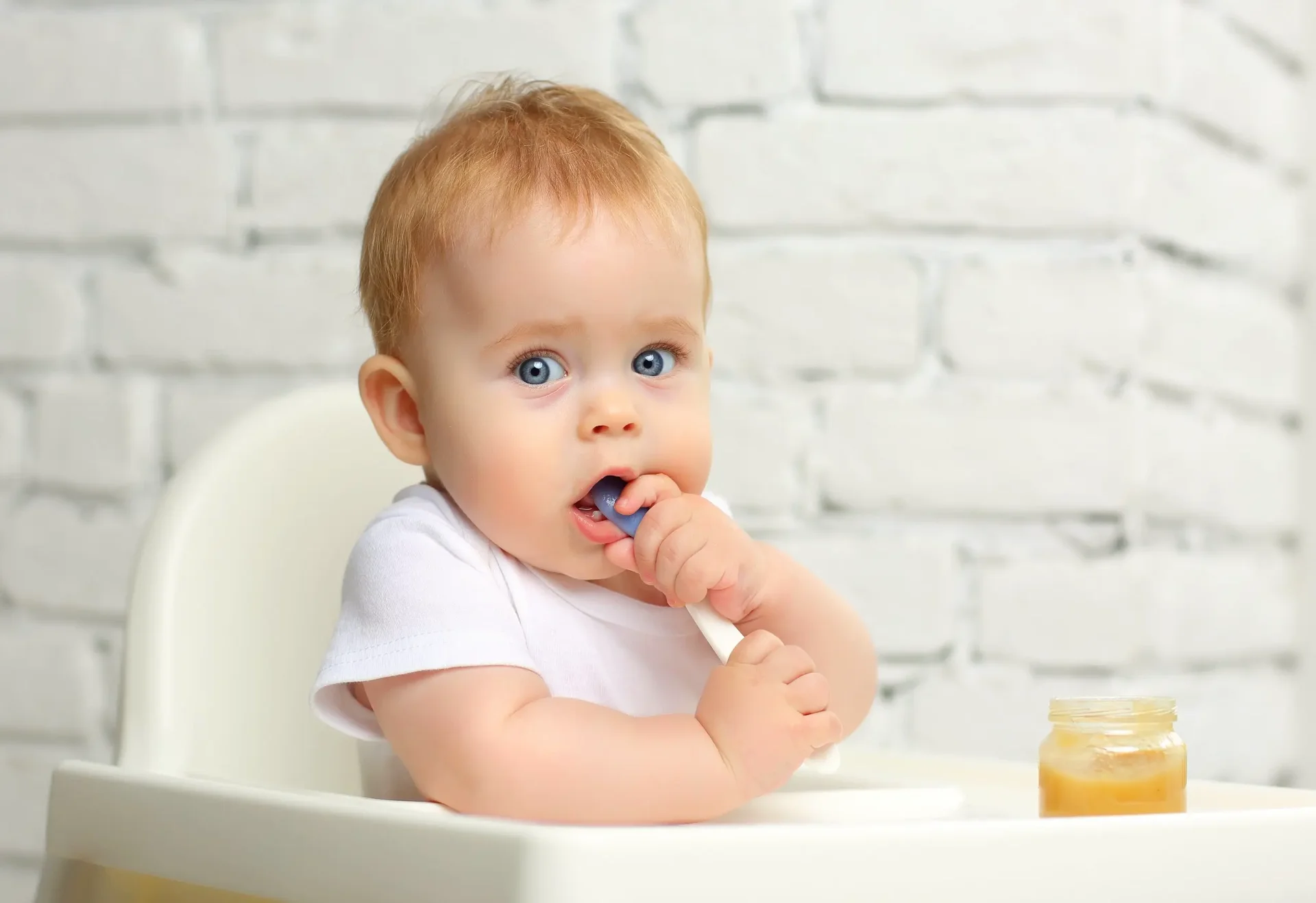
Starting solids is a significant event that requires your baby to have hit some important developmental milestones (e.g. sitting up, bringing items to their mouth, and losing their tongue reflex). A good time to start introducing solid food to your bub is when they’re around six months old.
When and how you start introducing solids can influence your baby’s future eating behaviours, food preferences and nutrition. You may be feeling a little overwhelmed on where to begin or which foods to choose.
We’ve got you covered. Our experts have tips and safety guidelines about when to start solids, what foods to introduce, food allergies, choking hazards, portion sizes and more.
NOTE: Introducing solids has a different meaning to weaning (although these terms are often used interchangeably). Weaning refers to the process of stopping breastfeeding, and what this might look like depends on the age of the child.
When do you start introducing solids to a baby?
Babies only need breast milk (or infant formula) for the first six months. Starting solids doesn’t mean you have to, or should, stop breastfeeding or providing infant formula. Breastmilk remains an important food for babies until at least twelve months of age.
It is generally recommended to start introducing solids to a baby at around six months of age, but not before four months of age. Before four months, your baby’s digestive system, along with their ability to chew and swallow, are still developing and so not yet ready for solid food.
From around six months and onwards, babies generally have the physical abilities to eat and digest some types of solid food and their nutrition requirements increase, too. Although breastmilk or infant formula remains the main source of nutrition until at least twelve months, solid foods will provide additional nutrients for your baby (in particular, iron).
NOTE: Some bubs won’t be ready at six months. We have tips below on how to spot your baby’s cues that they’re ready and you can guide them into starting solids.
What are the signs that your baby is ready for solids?
All babies are different and will reach developmental milestones in their own time. While six months is the generally accepted age to begin introducing solids, focus on the developmental stage rather than the physical age of your bub.
If you’re starting solids too early, your baby’s digestive system may not be mature enough to digest the foods. Starting solids too late may mean missing the chance for your baby’s taste and texture preferences to broaden.
Look for cues from your baby that they are ready before you begin introducing solids. These cues include:
- Showing an interest in your plate and the food you are eating
- Opening mouth when offered a spoon
- Can sit upright without support and has good head and neck control
- Tongue-extrusion reflex has disappeared. The reflex is an involuntary response which prevents your baby choking when they are not yet capable of swallowing solid food. When the tongue-thrust reflex is still present, the baby's tongue thrusts forward and pushes any food or solid objects out of their mouth. It is sometimes confused with a baby not liking their first foods, but it’s a sign they’re not ready for solid food at all.
There is no need for a baby to have teeth when starting solids, as gums work well for chewing and biting.
What baby food should I introduce first?
Let your baby set the pace of starting solids. This is a new experience for both of you, so it is important to be sensitive to your baby’s cues and let them control how much they eat. Remember, this is a learning curve for both you and your baby, so there will be lots of mess!
By six months, your baby’s iron stores are becoming depleted, putting them at risk of anaemia. Iron-rich foods should be some of the first foods you offer. Some examples include:
- Pureed meat, fish and poultry
- Cooked tofu and legumes
- Iron-fortified infant cereal
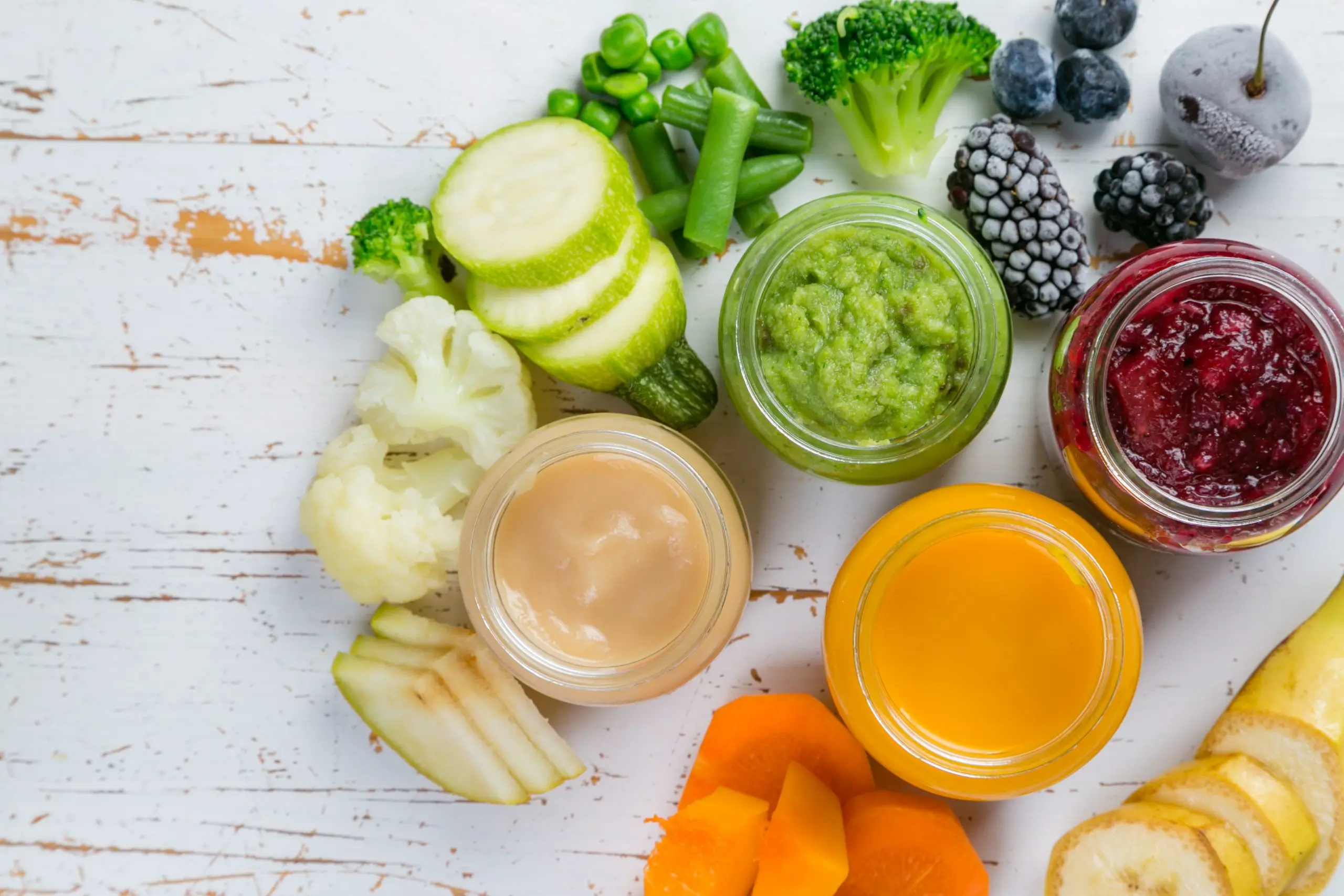
Once iron-rich foods are at the forefront of their diet, then you can continue to introduce a variety of foods including vegetables, fruits, grains and full fat dairy products. It is fine to introduce a number of new foods at a time, and in any order. By offering a range of foods, baby gets a range of nutrients and exposure to plenty of new tastes.
Under twelve months, cow's milk is only suitable in small amounts such as in cereal, cooking, or in dairy products such as full-fat cheese, yoghurt and custard. However, full cream cow's milk should not be consumed in place of breast milk or formula until at least twelve months of age.
How should I introduce solids to my baby?
Introducing solids can be done in any order, and at whatever rate suits your baby. There’s no set speed — let you bub set the pace. The most important thing is to provide an expanding variety of foods to support your bub’s nutrition, and help them accept different flavours and textures. Following your baby’s cues while starting solids will help them develop their own eating behaviours, taste preferences and food choices.
If your bub refuses to eat a food, it doesn’t mean they dislike the food. Each new food is a new experience for your baby. It can take many tries before they accept a different taste, texture or temperature.
Tips for introducing solids:
- Breastmilk or infant formula remains the main source of nutrition during this time and should be offered first.
- Offer your baby solid food when they are alert, comfortable and sitting upright. Avoid offering food when they are very hungry, distressed or tired, as this creates a less enjoyable experience for both you and your bub.
- Offer food in a non-coercive way. Pressuring your baby can result in them refusing the foods you are offering, and dislike mealtimes in general.
- Let your baby see you try the food too, but use your own spoon and bowl — sharing utensils or food increases the risk of tooth decay in babies because of the transmission of bacteria from the parent’s mouth.
- If your bub appears moody, wrap it up for that mealtime and try offering solids again later.
How much food should I offer when introducing solids?
When starting solids, offer your baby 1-2 teaspoons of food once a day. At this stage, expect your bub to take a small taste at most. They may not swallow much, but their appetite and enthusiasm will bloom as they grow and develop their eating skills. Offer more until they are eating regularly.
By twelve months, your baby will be eating around three small meals a day alongside their staple diet of breastmilk or infant formula. Cut back on solids if your bub refuses their normal breastfeeds or bottle feeds — they need the milk or infant formula as their base nutrition.
What are the rules about introducing allergenic foods to babies?
Allergenic foods are those that cause an allergic reaction in infants, children or adults. It’s possible for any food to cause an allergic reaction, but these are the most likely culprits:
- Eggs
- Cows’ milk
- Wheat
- Soy
- Peanuts
- Tree nuts (e.g. almonds)
- Sesame
- Fish
- Shellfish
When introducing solids, try to add common allergy causing foods to your baby’s diet before 12 months old. At this developmental stage, your bub’s immune system will be more likely to accept the allergenic food and it’ll be less likely that they’ll develop an allergy.
- Introduce one new allergenic food at a time so that if your baby has an allergic reaction, it will be easier to identify which food is the problem.
- Start with small amounts of allergenic foods (e.g. 1 tsp) and slowly increase the amount as your baby’s appetite grows.
- To prevent an allergy from developing, allergenic foods should be part of your baby’s regular diet. Aim to include them in at least two meals a week.
- Watch for signs of allergy. They usually occur immediately or within 2 hours.
NOTE: Do not rub food on your baby’s skin as it will not help to identify the possibility of an allergy. If you are concerned about your baby having a possible food allergy when you’re introducing solids, you can start by testing a bit of food on the inside of your child’s lip. If there is no reaction after a few minutes, you can then offer your baby a small amount.
If your baby shows any signs of an allergic reaction, stop giving them the food and seek medical attention.
The Australasian Society of Clinical Immunology and Allergy also has helpful information for parents: How to Introduce Solid Foods to Babies for Allergy Prevention - Frequently Asked Questions (FAQ).
What are the signs of an allergic reaction?
Allergies appear immediately or within 2 hours. Signs of an allergic reaction include:
- Swelling of the face, eyes or lips
- Hives or welts
- Vomiting
Stay with your baby and watch closely for signs of a severe allergic reaction.
You need to call an ambulance if your baby has any signs of severe allergic reaction (anaphylaxis):
- Wheezing
- Difficult or noisy breathing
- Swelling of tongue
- Swelling in throat, difficulty swallowing, drooling
- Change in voice or crying
- Difficulty making noise
- Wheeze or persistent cough
- Pale and floppy
For more information: Nip Allergies in the Bub
What texture should the foods I give my baby be?
There are two main approaches when introducing solids — pureed feeding and baby led weaning. The term ‘introducing solids’ actually means introducing smooshy, mushed, pureed food — it might not seem solid, but it’s still full of fibre and nutrients.
From around six months of age, babies can experiment with pureed foods and gradually progress with chunkier textures to reach soft finger foods at about twelve months.
It’s important to offer your baby foods that are the right texture for their stage of development:
Smooth foods
Pureed or finely mashed foods can be offered to your baby from around six months of age (and not before four months).
Soft lumpy foods and soft finger foods
When your baby is around six to eight months old, you can gradually transition to foods that have slightly more texture, but are still soft (for example: lumpy and roughly mashed foods).
Cut up foods
From around twelve months of age, your baby can be offered cut up versions of family meals. Hard vegetables may still need to be cooked so they’re soft enough for your baby to eat.
Baby led weaning
Baby led weaning (BLW) might be your style. BLW involves introducing solids by allowing your baby to feed themselves with finger foods from six months. No spoon-feeding purees at all.
BLW encourages your bub to develop skills like picking up food and bringing it to their mouth. To prevent choking, BLW first foods should pass the “squish test”. Before you offer the food to your baby, use your pointer finger and thumb to squish the food (this mimics the pressure of a toothless gum). If the food doesn’t smoosh, don’t give it to your bub.
Some examples of BLW first foods include:
- Chunks of avocado
- Soft-cooked, hand-sized pieces of chicken, beef or fish can be introduced as a protein source. Make sure they are cooked until tender and easily mashable.
- Well-cooked vegetables like squishy sweet potato, pumpkin, broccoli and carrot can be offered as key BLW first foods.
Typically, babies are developmentally ready to start feeding themselves around six months of age, however the BLW approach is not appropriate for babies with developmental delays, digestive problems or babies who are not showing signs of readiness.
Find out more about baby led weaning on our blog.
Many families choose to do a combined approach of purees and a baby led weaning approach when introducing solids. Choose what best suits you, your baby, and your family.
NOTE: Whether you’re introducing solids with baby led weaning or purees, breastmilk or formula should be your baby’s main source of nutrition throughout the first year.
Are there any foods I shouldn’t give my baby?
Introducing solids isn’t just about providing extra nutrition, but equally to support your baby in developing new skills and being exposed to different tastes, textures and flavours. There are high-risk foods that you shouldn’t give your baby until they’re twelve months or older:
- Sugar
- Honey
- Salt
- Juice and sugar sweetened drinks
- Popcorn
- Small, hard pieces of food (e.g. raw carrot or raw apple)
- Chopped or whole nuts — use nut butters, pastes or flours instead
For more information regarding the introduction of solid foods, refer to eat for health infant feeding guidelines, or see your GP or dietitian.
We also have guides on baby led weaning and tips for managing food allergies in babies, as well as other parenting articles on our blog.
Share